
Hungarian Sunflower Honey
The Honey of Vitality & Brightness
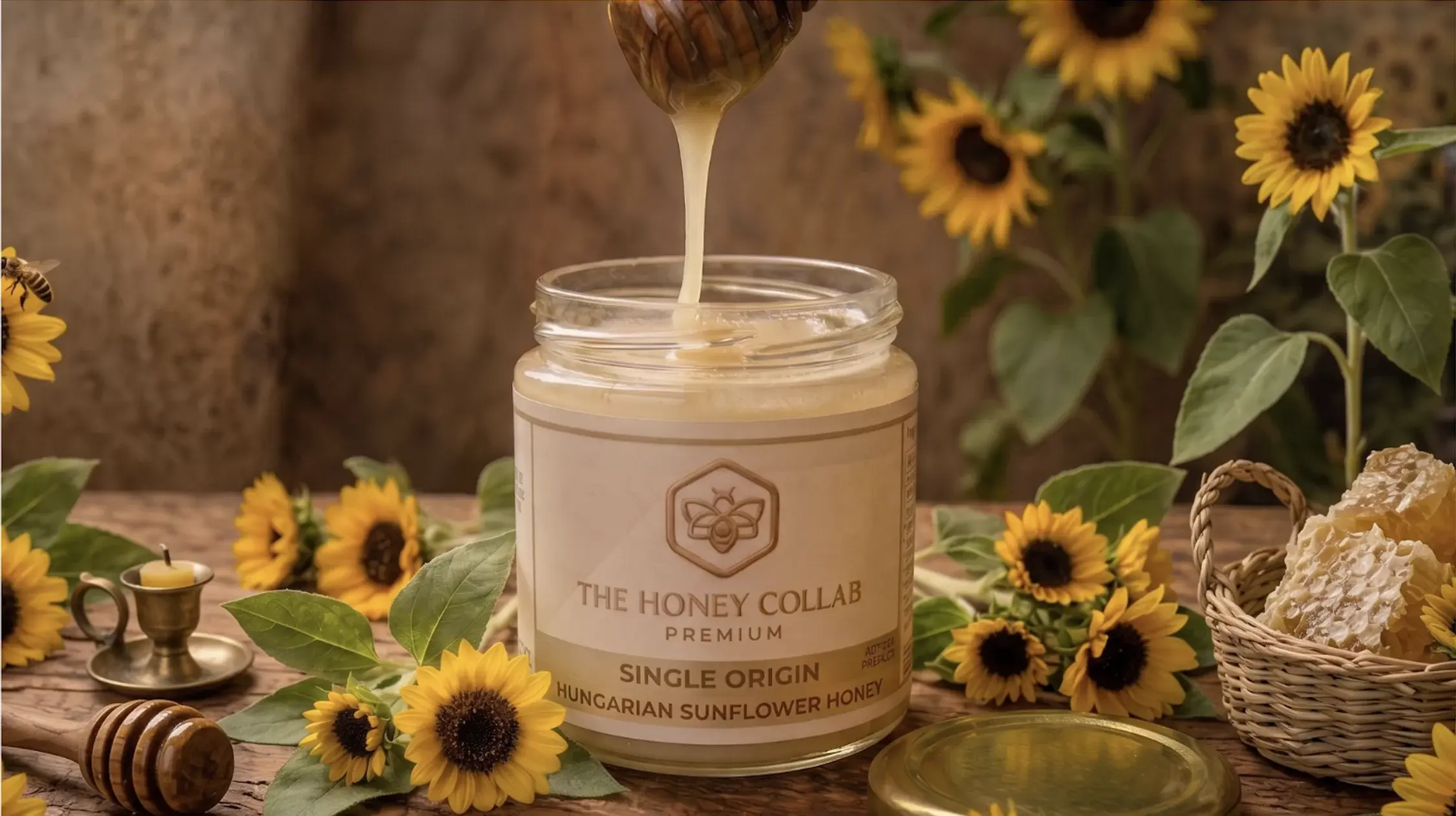
Bees make it from the bright yellow Helianthus annuus blossoms that follow the sun. It is usually golden to amber when liquid and turns dense and buttery yellow once it crystallizes. The smell is lightly floral with a trace of pollen and wax — characteristic of sunflower fields in late summer.
Composition
Glucose 35–40%, Fructose 32–35%, rich in minerals, polyphenols, and enzymes. pH 3.4–4.0.
Physiological Effects
1. Cardiovascular & Circulatory Support
Flavonoids and selenium help reduce LDL oxidation. Magnesium and potassium aid vessel relaxation and heart rhythm.
2. Liver & Gall-Bladder Stimulation
Sunflower nectar contains natural bitters that encourage bile flow. Regular use in warm water with lemon or ACV supports fat digestion.
3. Immune Modulation
The moderate peroxide production plus polyphenols suppress bacterial growth. Pollen traces add small doses of plant sterols, supporting adaptive immunity.
4. Skin & Wound Care
Balanced acidity and antioxidant content accelerate granulation (new tissue growth). The thick texture keeps wounds moist while preventing infection.
5. Energy & Mood
Medium glucose–fructose ratio gives quick yet sustained energy. Tryptophan and phenolic acids mildly influence serotonin synthesis, improving mood stability.
In Creams & Balms
- Texture: emulsifies smoothly with oils; sets firm but melts at skin temperature.
- Mineral richness: calcium + magnesium improve epidermal repair.
- Color & scent: gives a golden hue and warm, nutty aroma without added fragrance.
- Suggested ratio: 3 parts tallow/shea : 1 part sunflower honey.
- Use for: dry elbows and heels, mild eczema, after-sun skin replenishment.
In Elixirs & Tonics
- Perfect with lemon, turmeric, ginger, or cinnamon — the taste balances their sharpness.
- Mix 1 tsp honey + 1 tsp apple-cider vinegar + warm water for a morning liver tonic.
- For athletes: 1 tsp honey + pinch sea salt + squeeze lemon in 250 ml water as a natural electrolyte drink.
Hidden Science
1. High Phenolic Diversity
Over 70 phenolic compounds identified; they scavenge free radicals more effectively than many lighter honeys. Some (caffeic and chlorogenic acids) show selective inhibition of certain tumour-cell lines in vitro.
2. Trace Selenium Activity
Sunflower roots accumulate selenium; small amounts appear in the nectar. Selenium is part of glutathione peroxidase, a key antioxidant enzyme for liver and thyroid protection.
3. Electro-Chemical Potential
Conductivity around 400–500 µS/cm: moderate, meaning a balanced mineral–sugar matrix good for skin applications.
4. Crystallisation Pattern
The crystals form sunflower-petal-like radial structures under microscope — high surface area that holds aromatic compounds better than cubic crystals.
5. Micro-Flora Interaction
Fermentation experiments show that Lactobacillus plantarum thrives particularly well in diluted sunflower honey; it acts as a prebiotic substrate for gut-friendly bacteria.
6. UV Absorption Band
Contains carotenoid residues from pollen that absorb UV-B — a reason sunflower honey in creams offers mild natural photoprotection.
Practical Use
- Morning drink: 1 tsp honey + warm water + lemon to wake digestion.
- Pre-workout: 1 tsp on its own 20 min before training.
- Skin mask: mix equal parts sunflower honey and yogurt; leave 15 min for brightness.
- Hair conditioner: 1 tbsp honey + 2 tbsp olive oil; leave 30 min before washing.
Essence
Sunflower honey is the honey of vitality and brightness. It carries the energy of plants that follow the sun: optimism, stamina, and renewal. Rich in minerals and protective antioxidants, it supports heart, liver, and skin, and gives a warm, solar tone to any blend or cream.