
Hungarian Multiflower Honey
A Living Record of the Landscape
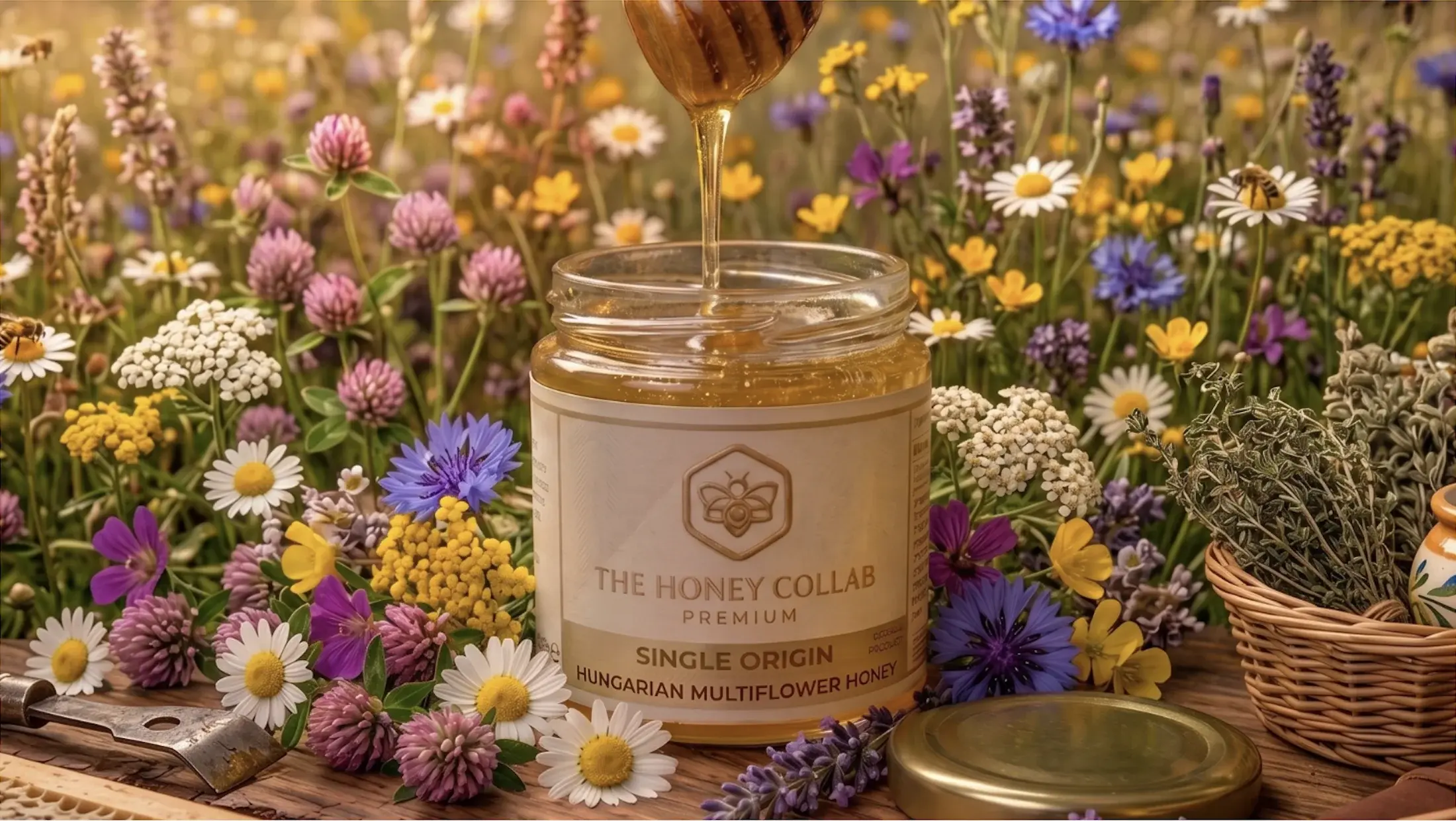
"Multiflower" (or "polyfloral") means the bees gather nectar from many different plant species blooming in the same area. Its exact composition changes with geography and season — spring versions are lighter and more floral; late-summer batches are darker and richer. This variability makes it a snapshot of the ecosystem in that time and place.
Physiological Effects
1. General Immune & Digestive Support
Gentle antimicrobial action from glucose oxidase-derived hydrogen peroxide. Small quantities of local pollen stimulate tolerance to airborne allergens. Encourages beneficial gut bacteria when used raw and unheated.
2. Metabolic & Energy Balance
Mix of glucose and fructose gives both immediate and sustained fuel. Helpful for athletes or fasting re-feed because it restores liver glycogen smoothly.
3. Wound & Skin Repair
Maintains a moist environment while providing low-grade peroxide and acidity that inhibit pathogens. Trace minerals assist collagen formation.
4. Respiratory & Throat Relief
The viscosity coats mucous membranes, easing cough and irritation.
5. Antioxidant Buffering
Flavonoids from multiple plant families supply broad-spectrum free-radical scavenging, reducing oxidative stress in blood and liver.
In Creams & Balms
- Texture: medium viscosity; blends easily with fats or waxes.
- Acidity: supports skin's microbiome by keeping pH around 4.
- Ideal ratio: 3 parts base oil or tallow : 1 part honey for daily skin cream.
- Works as a humectant, gentle antiseptic, and mild exfoliant.
In Elixirs & Tonics
- Excellent universal base for herbal or vinegar tonics.
- Combines well with citrus, ginger, turmeric, or adaptogenic mushrooms.
- 1 tsp in warm water (not hot) each morning supports digestion and hydration.
Hidden Science
1. Micro-Nutrient Diversity
Every flower species contributes a different pattern of amino acids and trace elements. Analyses routinely find more than 20 distinct mineral ions and over 100 aromatic compounds—a nutritional mosaic rarely matched by monofloral honeys.
2. Seasonal Anti-Allergy Effect
Because local pollen traces appear in it, regular consumption can desensitize the immune system to those same pollens. Clinical trials show mild improvements in hay-fever symptoms for some people after 4–6 weeks of daily use.
3. Variable Antioxidant Spectrum
Darker multiflower honeys (late-season) can reach antioxidant capacities near that of manuka; lighter spring honeys are gentler but higher in vitamin C equivalents.
4. Electrical Conductivity
Typical conductivity 300–500 µS/cm indicates a moderate mineral load. That translates to a balanced electrolyte profile when diluted for hydration drinks.
5. Fermentation Potential
Because it contains natural wild yeasts and variable sugars, diluted multiflower honey is ideal for making mead, fermented tonics, or probiotic "honey water."
6. Environmental Indicator
Pollen analysis of multiflower honey is used in ecology to track plant biodiversity and pesticide exposure; it is literally a biological record of local soil and air quality.
Practical Use
- Morning: 1 tsp in warm water with lemon for digestive wake-up.
- Mid-day energy: drizzle over oats, yogurt, or fruit.
- Topical: mix with clay or aloe gel for a cleansing face mask.
- Minor wounds: thin layer under breathable dressing.
Essence
Multiflower honey is the mirror of the landscape—every jar is a living record of hundreds of blossoms. Nutritionally, it delivers the most balanced spectrum of sugars, minerals, and antioxidants, making it the all-rounder for daily nourishment, skincare, and herbal preparation. Its strength lies in diversity and adaptability—a perfect foundation honey for anyone who wants harmony with the local environment.