
The Lifecycle of a Honeybee: An In-Depth Look
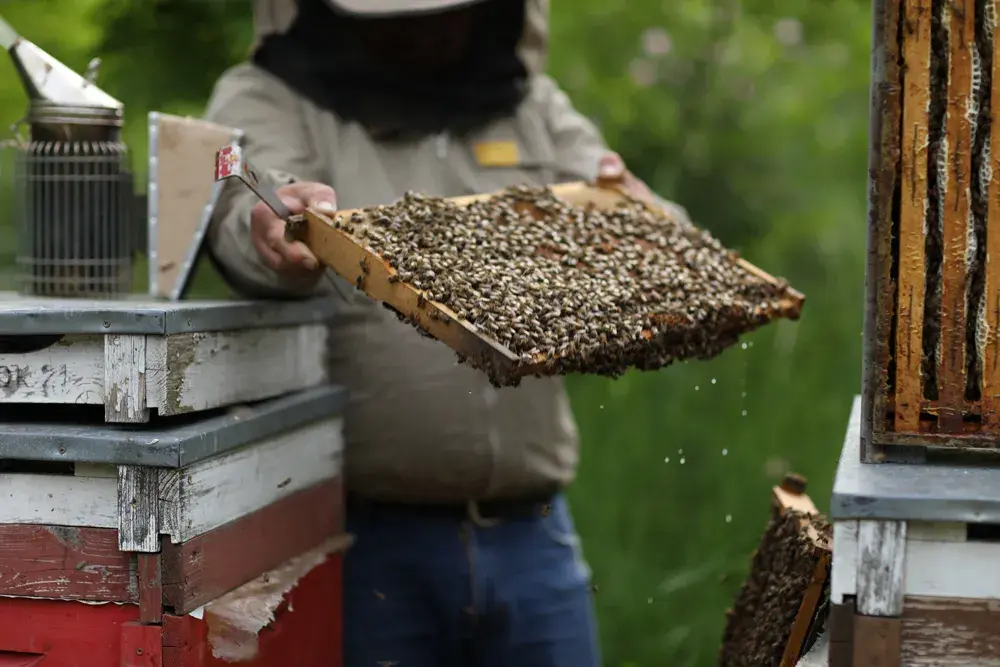
The Three Castes of a Honey Colony
Honey bee colonies are organized into three distinct groups, each with specific roles and responsibilities. Understanding these castes helps us appreciate the remarkable organization of a bee colony:
- Queens: Egg-laying females responsible for colony reproduction and survival
- Drones: Males whose primary purpose is to mate with the queen
- Workers: Non-reproductive females who perform all labor-intensive tasks
Development Stages
Stage 1: Egg (0-3 days)
The lifecycle begins when the queen deposits tiny oval-shaped eggs into individual cells. These eggs are barely visible to the human eye but represent the beginning of a new bee's journey.
Stage 2: Larva (3-9 days)
After 72 hours, eggs emerge into larvae. Development timelines vary by caste:
- Queens remain in the larval stage for 5.5 days
- Workers remain for 6 days
- Drones remain for approximately 6.5 days
During this period, larvae undergo rapid growth and shed their skin multiple times as they develop.
Stage 3: Pupa (9-21 days)
Once larvae reach maturity, worker bees cap the cells that contain the larvae with wax. Pupal duration differs by caste:
- Queens develop in approximately 8 days
- Workers develop in 12 days
- Drones develop in roughly 14.5 days
The pupal stage is critical for transformation, where the bee develops wings, eyes, and all necessary organs for adult life.
Stage 4: Adult (21+ days)
Upon emergence, adult bees assume their roles within the colony. Worker bees perform age-based duties including nursing young, maintaining the hive, and foraging. Queens focus on reproduction, and drones exist primarily for mating purposes.
Lifespan Variations
Adult lifespans depend significantly on season and caste:
- Summer workers: Live about 6 weeks, intensively foraging during peak season
- Winter workers: Extend to 4-5 months, conserving energy during dormancy
- Queens: Can survive up to 5 years, supporting the colony for multiple seasons
- Drones: Live a few months, primarily during mating season
A Testament to Nature's Design
The honeybee lifecycle is a marvel of natural engineering. From microscopic eggs to complex adults, each stage serves a purpose in the colony's success. Understanding this process deepens our appreciation for the bees that produce the honey we enjoy, and emphasizes why protecting them matters so much.